The Greatest Sandwich Ever Told
Muffuletta. If you know, you know.
I have many favorite sandwiches.
There’s the Philly cheesesteak, of course. The Italian hoagie. Pastrami and Swiss on rye. Sausage, peppers and onions on a torpedo roll. Pulled pork on a kaiser. Pork roll, egg and cheese on the boardwalk. The Jersey diner tuna melt. Loaded roast beef, which should never be confused with a Philly cheesesteak. The 7-Eleven quarter-pound Big Bite. (Controversial!) The humble PB&J, elevated to artistry by sourdough bread, Skippy SuperChunk and raspberry habanero jam. I have lived a rich, varied, sandwich-heavy life.
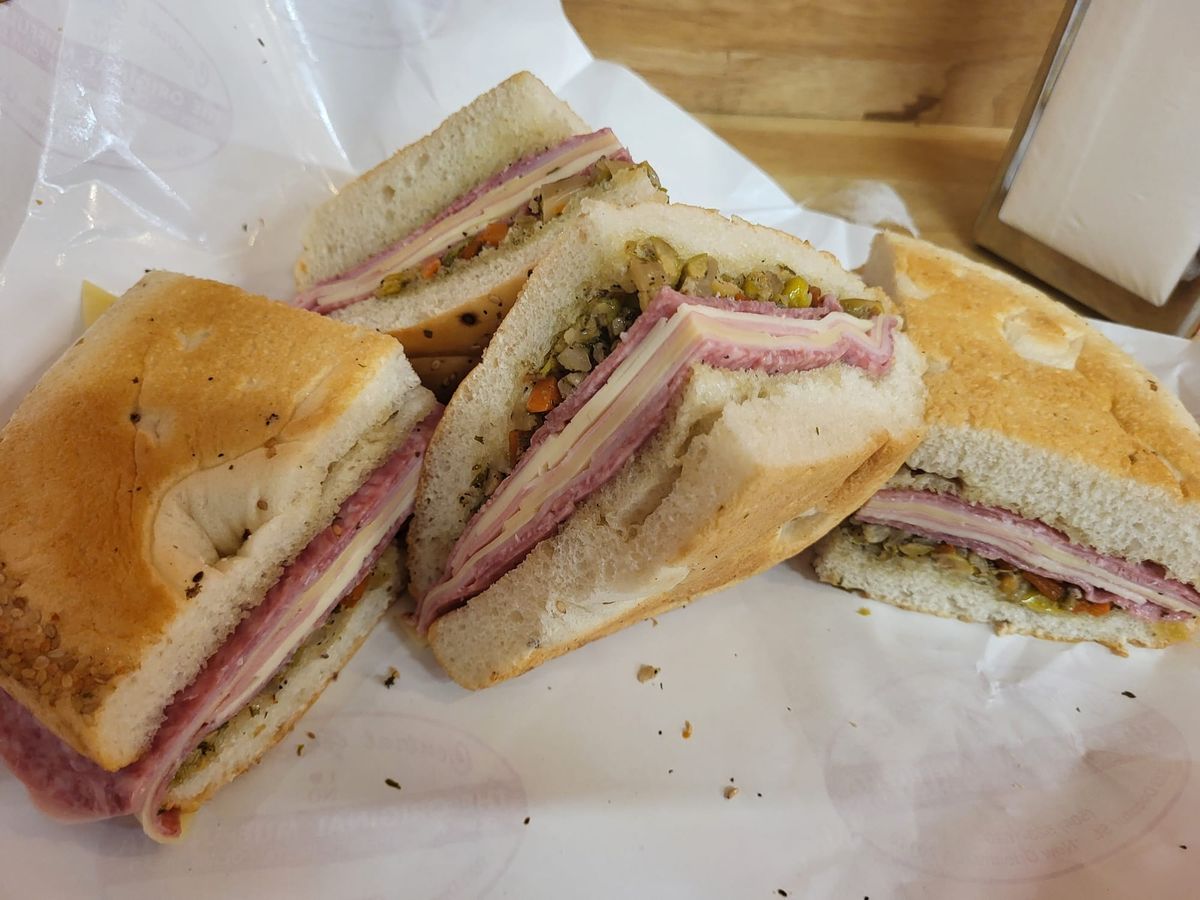
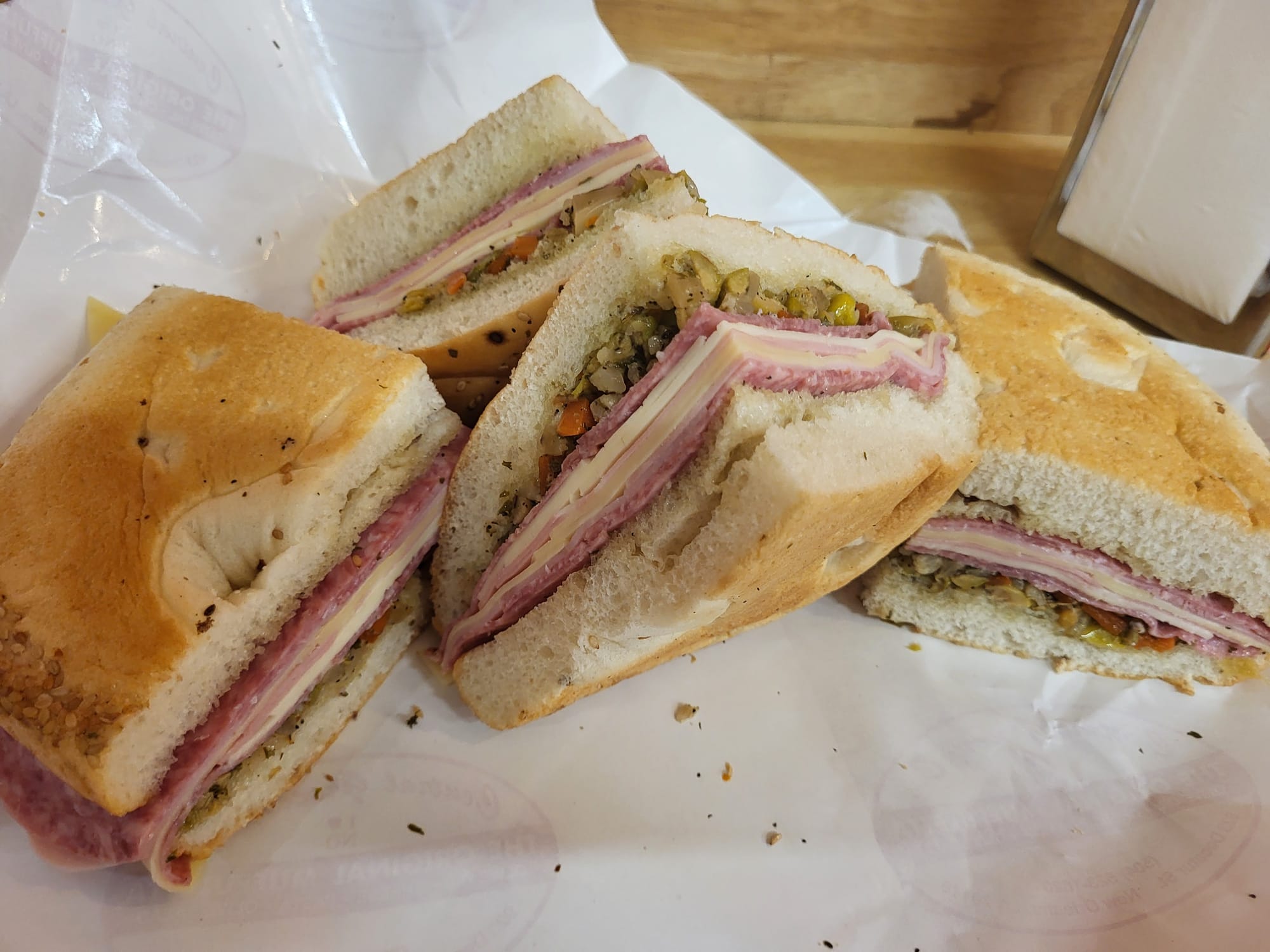
My favorite sandwich of all, however, may be the muffuletta, which I discovered when I haunted New Orleans more regularly as a much younger man. The muffuletta is a heap of Italian lunchmeat within a medium-sized, pillowy, sideways-sliced loaf of bread, dressed with a generous layer of olive tapenade. It’s part hoagie, part charcuterie board and as close as humankind has ever come to achieving transcendence.
So great is my passion for muffuletta — not to mention my passion for bunburying away from actual work — that I journeyed several blocks down the Mississippi River in search of the sandwich’s source.
Like other, lesser sandwiches, the muffuletta comes from humble origins.
“Everybody wants to know how the sandwich came about,” said Tommy Tusa, co-owner (with his brother Frank) of Central Grocery in the French Quarter. Tusa’s grandfather, Salvatore Lupo, invented the muffuletta early in the 20th century.
“There were no grocery stores back then,” Tusa said. “The French Market was the hub of produce, seafood and meat. All across the street, they had vegetable and fish market stands. So the fishermen and the farmers, they'd come here on a regular basis to sell their goods. And then people in the city, when they wanted fruit and vegetables and seafood, would come to the French Market.”
Lupo, a Sicilian immigrant, already owned a small market in what is now a very touristy neighborhood just a few blocks from Jackson Square. “My grandparents made the olive salad, but they didn't make the sandwich,” Tusa said. “They had peddlers from the Italian bakeries that would come down and sell the hot muffuletta bread. And then they'd have all the cold cuts. People in the neighborhood were eating all this separate.
“So the light bulb went off. Okay, I'm going to put it all on the bread, and now we're going to sell the muffuletta sandwich.”
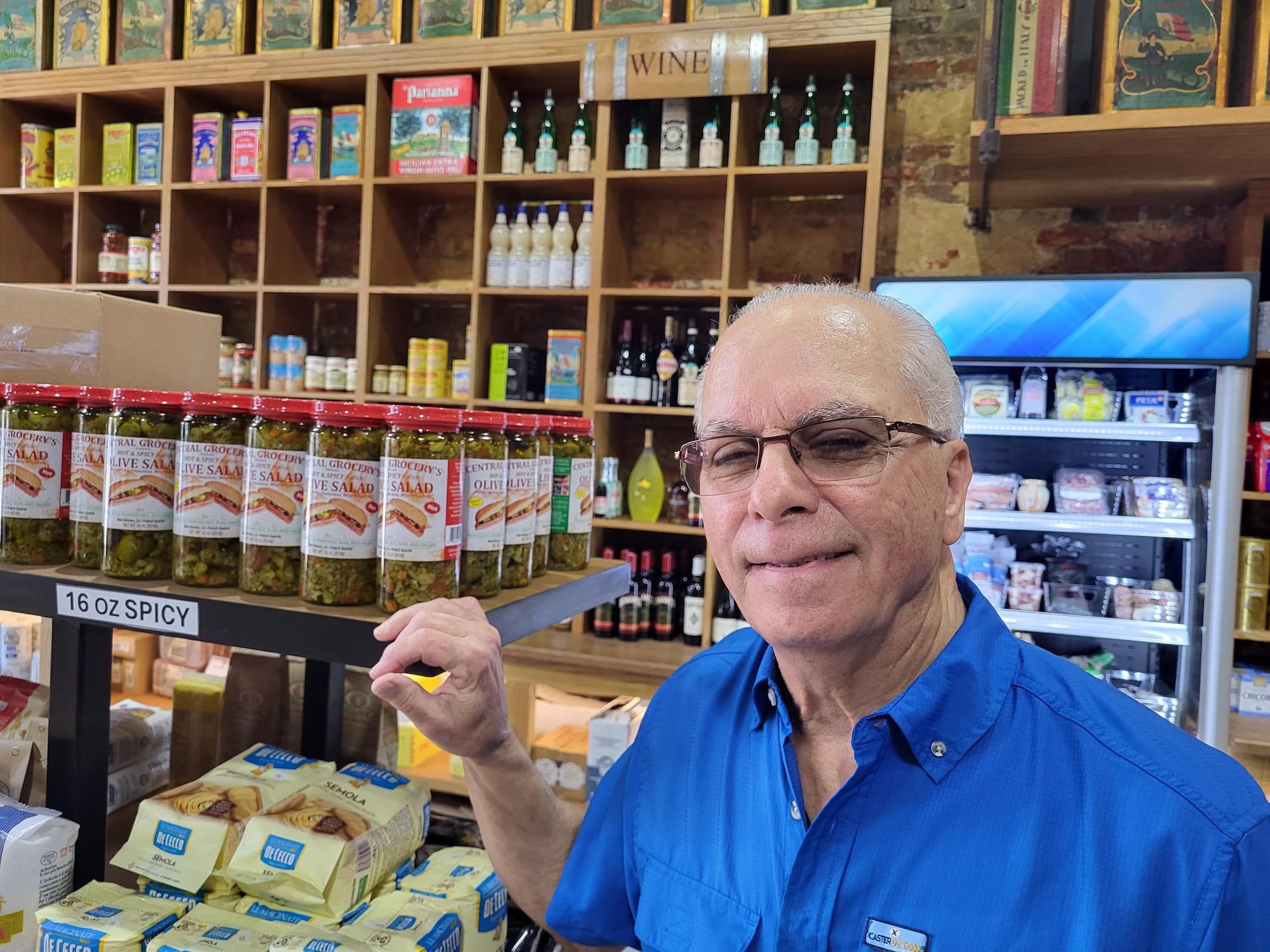
That inspiration became a culinary tradition. The muffuletta may not be as well known as gumbo, jambalaya or even its top New Orleans sandwich competitor, the overrated po’ boy. But in my opinion, it should be as well known and appreciated as the Mona Lisa or “Hey Jude.”
But Tusa was educating me, and not just about French Quarter history. I always thought that “muffuletta” referred to the olive salad, not the bread.
“It’s a round, soft seeded bread,” Tusa explained. “It’s softer than the other Italian breads.”
And that fun-to-say, slightly naughty-sounding name? “I don't think anybody will know how it became called muffuletta. But you know there are people that have the last name of Muffuletta. So it could have been a baker who said ‘I'm gonna call it like my name.’ I mean, that's as good a guess as any.”
The muffuletta took off, name and all. Today, sandwiches by that name are available all over the region. The Tusa family trademarked “Central Grocery Muffuletta” but could not trademark the word muffuletta itself. “It’s like ‘hamburger,’” Tusa said. “You can’t trademark that.”
An authentic muffuletta contains genoa salami, ham, mortadella, provolone cheese, Swiss cheese and an olive salad made from Spanish Queen olives and extra virgin olive oil. A little oil is brushed on both sides of the bread; Philly hoagies are made in a similar way. The sandwich keeps and travels well, and not only are Central Grocery muffulettas available at several locations in greater New Orleans, but they can be shipped around the country by Goldbelly.
The signature olive salad is also available via shipping for those of you who might prefer to locally source your mortadella. The salad is very versatile. Tusa said it goes great with seafood. I mentioned that it is delicious with pesto genovese over tortellini, and he looked at me the way Taylor Swift might look at a “fan” who knows the layout of her home a little too well.
Lupa was lucky to sell 20 to 50 muffulettas per day out of his little market decades ago. Today, Tusa sells about 200 to 500 on a good day. The Monday before Mardi Gras is usually his busiest day of the year – he might sell 1,200 sandwiches, with a line of customers snaking down Decatur Street – but Super Bowls have been bringing in big business since Super Bowl IV in Tulane Stadium in 1970.
Central Grocery is lucky to be open for Super Bowl LIX. The taller building next door collapsed during a heavy storm three years ago, ripping a wide hole into the tiny market’s roof. The Tusas supplied muffulettas out of a remote location in Kenner (near the New Orleans Airport) for years, making just enough money to keep their staff employed, before reopening in December.
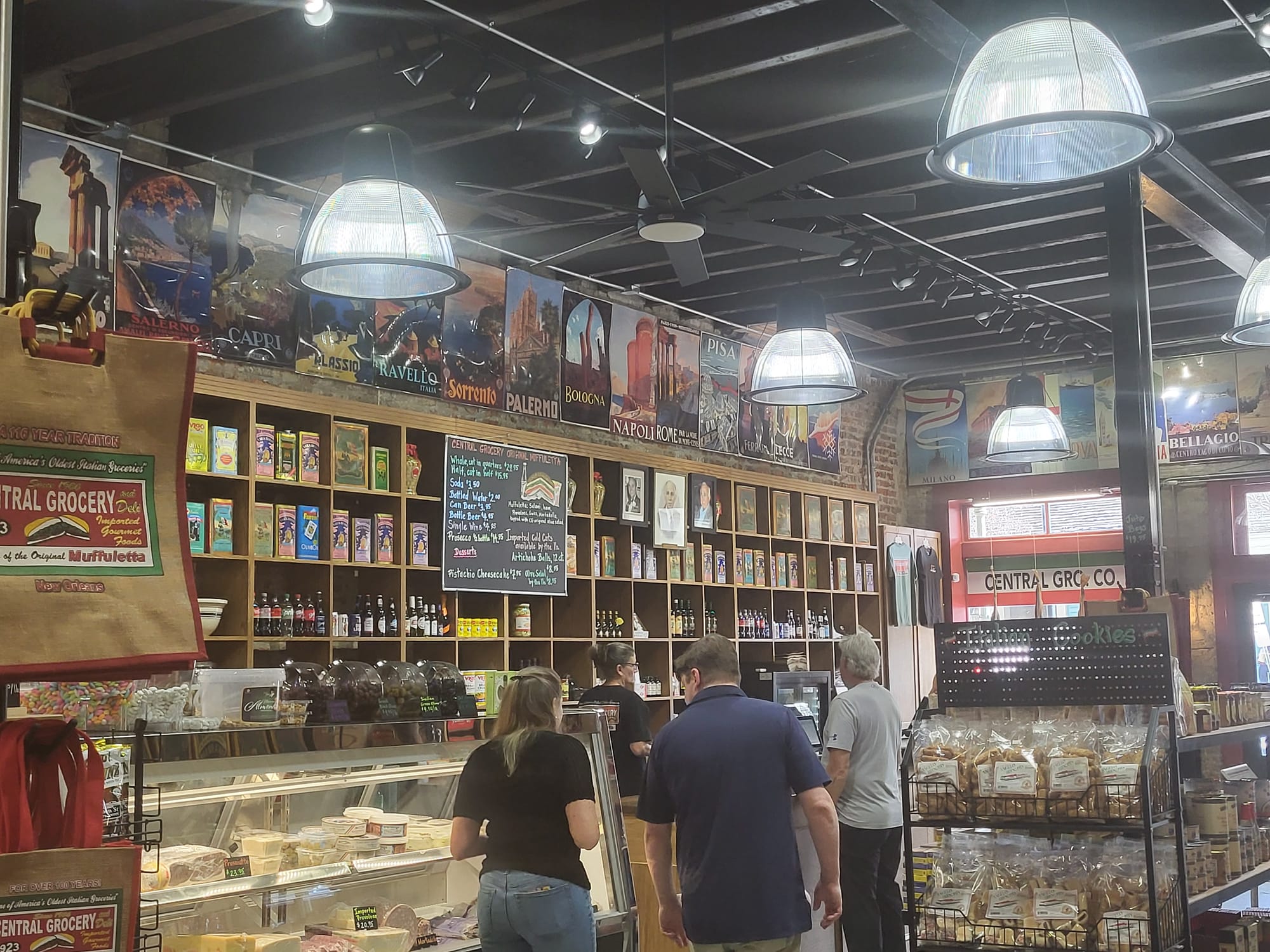
Hurricane Katrina was also devastating, though the French Quarter was not hit as badly as most of the city. “A lot of local people ran to their attics to get away from the floods, then got trapped up there,” Tusa recalled. “So they had boats going through the streets, listening to people tapping on roofs and stuff.” Central Grocery was closed for months after Katrina, then reopened to a depopulated city unable to accommodate tourists. It took over a year for business to return to normal.
The New Year’s Day terrorist attack, of course, happened just one month ago and about a half mile away. “I think that's having an effect on us right now,” Tusa said. “It's keeping some people away. They're afraid.”
The French Quarter was indeed rather quiet when I visited on Wednesday. There’s an armed military presence on Bourbon Street and helicopters periodically flying overhead. Central Grocery had some lunchtime traffic, just as nearby Cafe Du Monde served a steady trickle of beignet pilgrims, but I have been in enough tourist destinations on the Wednesday before the Super Bowl to know that it did not feel like the Wednesday before the Super Bowl in one of America’s most treasured locations.
All the more reason, perhaps, to cherish New Orleans traditions and institutions. We need New Orleans for its food, culture, music, history, architecture and the (often bleary) memories it provides to all who visit. But the city needs us to keep visiting.
“We get people coming here from all over the world,” Tusa said. “Japan. China. I love to wait on people because I can ask them where they’re from. ‘I'm from Japan,” they might say. ‘My friend came here. She told me to come here.‘
“I put this place back as best I could after the storm. I don’t want to change this place. It’s the flagship. It’s what people see and take back with them.”
I ordered a full muffuletta. But I had never engaged a full-sized Central Grocery muffuletta before. Also, I am not 22 anymore. I ended up taking half of the sandwich back with me to the hotel. I plan to bring the leftovers to the media center on Thursday so others can enjoy watching me eat them.
I lost a day of searching for the choicest Super Bowl quotes, and I apologize to readers who were expecting them. I gained instead a chance to imagine Decatur Street as a busy working-class market neighborhood in a bygone time, to talk mortadella with someone whose family history is similar to mine, and to taste something that reminded me of younger, wilder and (yes) simpler times.
A wise man once said to “Enjoy Every Sandwich.” And I may STILL be enjoying this one as you read this.
Tomorrow at Too Deep Zone: Actual NFL football talk, including a Super Bowl prediction!