Sledgehammers: 2026 NFL Draft Safeties
Ohio State's Caleb Downs leads an impressive group -- seriously! -- that includes tough guys like Emmanuel McNeil-Warren and smooth operators like Genesis Smith.
Safety is one of the deeper position groups in the 2026 draft class. That’s faint praise, but there are many safeties in this class who can play an immediate role, and a few have Pro Bowl upside, starting with perhaps the safest pick on the entire board.
Caleb Downs, Safety, Ohio State
Downs is the best safety prospect since at least Kyle Hamilton. He’s one of the three or four best players in the 2026 draft class. He was Freshman of the Year at Alabama in 2023, earned All-America honors at Ohio State 2024 and won the Jim Thorpe Award as the nation’s best defensive back in 2025.
By the way, the Jim Thorpe Award now has a corporate sponsor. I refuse to name it. Thorpe rose up from the “Indian” boarding schools of the late 19th century (their stated cultural-obliteration intent was to “kill the Indian, save the man”) to become one of America’s first sports superstars, only to have Olympic medals stripped from him on a racially-motivated pretense. The very concept of placing some corporation’s name in front of Thorpe’s radicalizes me in ways that are beyond the scope of a draft profile of an Ohio State safety. It’s not quite the Dr. Martin Luther King Award for Social Justice, brought to you by WeBuyAnyMicrobus.com, but it’s yucky in a similar way.
Anyway, Downs is explosive, sudden, and toolsy as hell. He diagnoses plays quickly, is often on the move before the ball is thrown and comes down from deep safety to make plays in the box.
Downs can handle man coverage assignments. Per Sports Info Solutions, he lined up in slot coverage on 81 passing plays but was targeted just six times, allowing two receptions for just 14 yards. Downs is also a sound tackler who was charged with just two broken tackles in 2025. He consistently wraps low and hog-ties ballcarriers. He has a team-captain, quarterback-of-the-defense reputation.
The negatives in Downs’ game boil down to quibbling and space-filler: he’s not big or a lights-out hitter, probably couldn’t cover Justin Jefferson 1-on-1 in the slot, and so on.
Downs’ final draft position will depend on which team needs a safety most or, more accurately, which team near the top of the draft board has so few other needs that they can pounce on a Pro Bowl-caliber safety. The Chiefs with the ninth pick? The Rams with the Falcons’ 13th pick?
The Cowboys pick 12th and like to draft big-fast-famous guys regardless of positional value. The Cowboys can be very foolish, but in many ways they are also very wise.
Dillon Thieneman, Oregon
Speed kills.
Against Illinois in 2024, Thieneman lined up 19 yards deep in the middle of the field on one play, yet managed to stop a jet sweep to the right for a gain of four. There’s also lots of film of Thieneman starting out in the middle of the field but breaking up or intercepting passes along the deep sidelines. That’s not as common in college football as you might think: not many safeties have the pure speed and anticipation to make such plays.
Thieneman combines 4.35 Combine speed with three years of starting experience: two at Purdue and one at Oregon. He diagnoses plays quickly and takes good angles in pursuit. He’s not a big hitter or block shedder, but he’s so fast that it can seem like he’s everywhere on the field. He also has experience as a punt returner. He’ll be drafted early in the double-digits of the first round, quickly earn a starting job and be solid, and perhaps a little splashy, for many years.
Jalon Kilgore, South Carolina
Here are Kilgore’s coverage stats when lined up as a slot cornerback in 2025: 254 snaps, 45 targets, 16 catches, 206 yards, 1 touchdown, 2 interceptions, 2 dropped interceptions, 11 passes defensed.
Pretty damn good, right? I’ll take a safety who allows just a 36% completion rate and breaks up almost as many plays as he allows in the slot, thank you very much.
Kilgore is a well-built box defender with great short-area coverage skills who likes to mix it up in the run game. He lacks the elite turn-and-run speed to cover speedy slot receivers, but that’s a lot to ask. Kilgore is more of an updated version of an old-fashioned strong safety.
Kilgore and Nick Emmanwori were teammates in 2024. Kilgore lacks Emmanwori’s OMG traits, and he’s not likely to land on a team that already has a deep secondary and can noodle with a rookie safety as a part-time linebacker and edge rusher. But Kilgore can do some of the things that the Seahawks star does. He could also shine in a more conventional role.
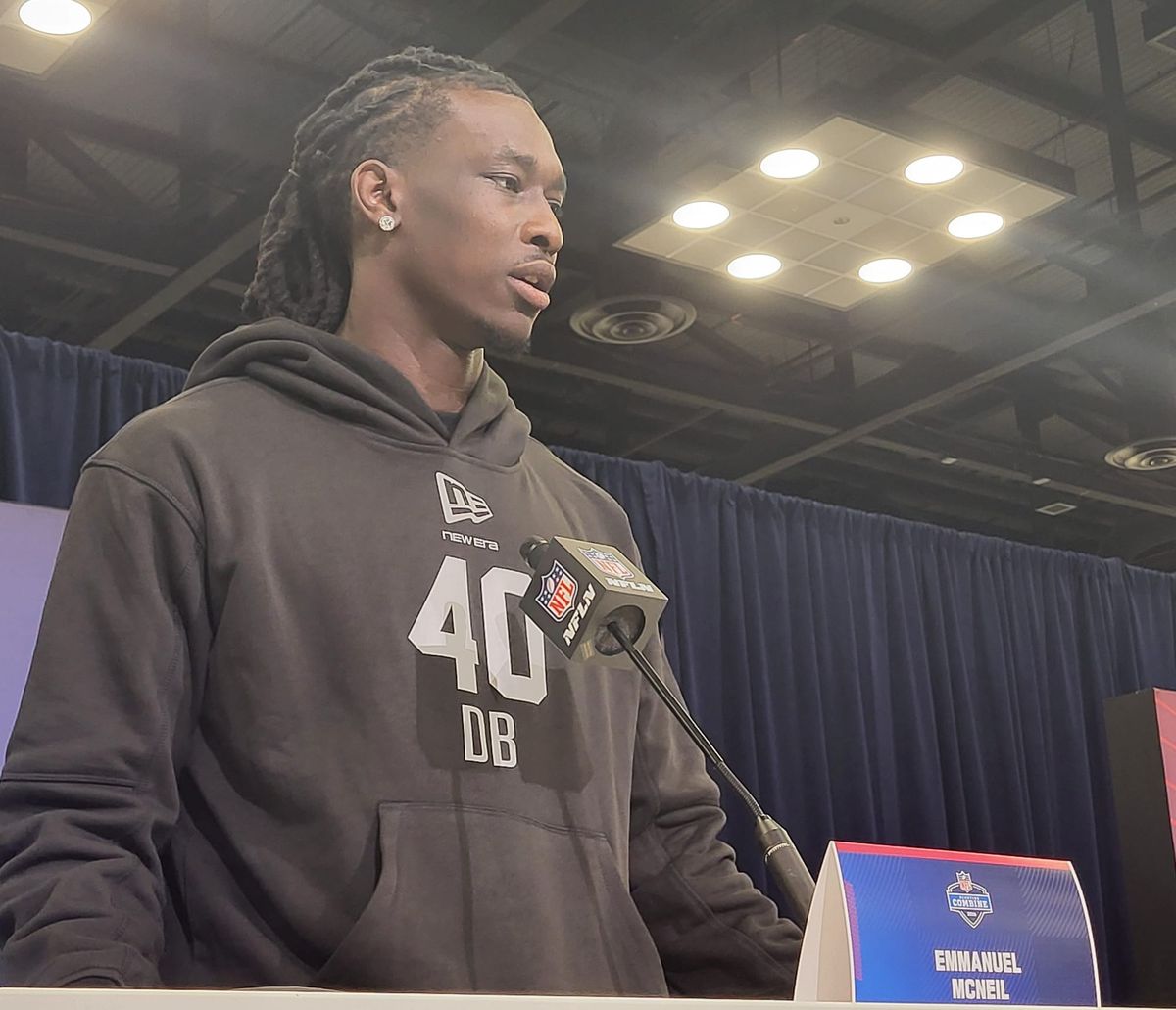
Emmanuel McNeil-Warren, S, Toledo
McNeil-Warren plays safety like the boss at the end of a video game level. A ballcarrier bursts through the front seven of the Toledo defense, thinks he’s about to score a touchdown … and then finds a 6-foot-3, 210-pound free safety who runs and hits like the Ghost of the Legion of Boom waiting to jar the football loose (five forced fumbles in 2024-25) by driving a shoulder into his solar plexus.
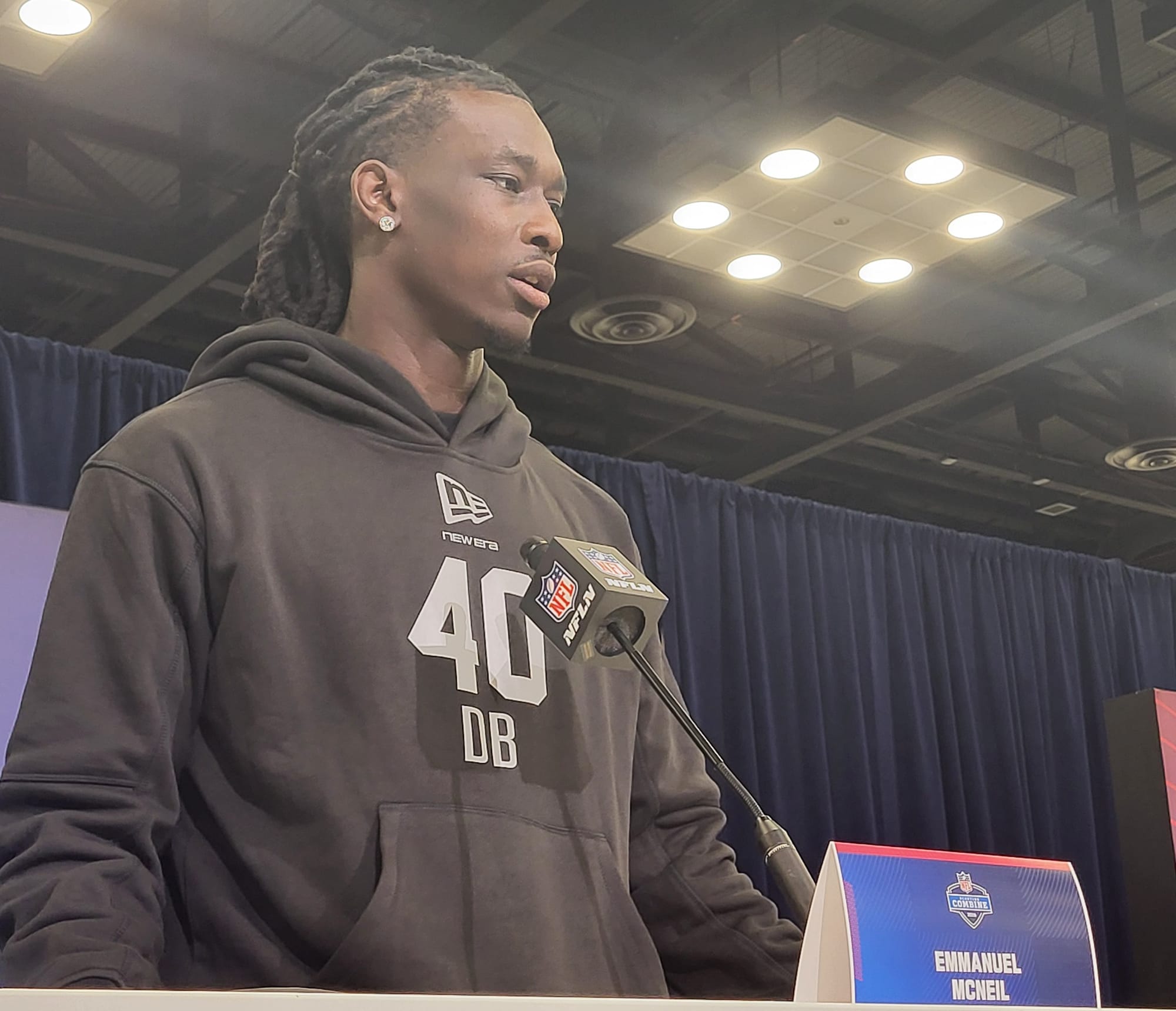
McNeil-Warren played 228 pass snaps as a traditional safety, 54 at linebacker and just 26 as a slot corner in 2026. That’s remarkable, because McNeil-Warren looks and plays like a Honey Badger-like all-purpose defender, not someone who usually lines up 12 yards deep. The Rockets were loaded in the secondary and ran a scheme heavy on two-deep safety alignments. McNeil-Warren has the physicality and tools to play a Swiss Army knife role, but that’s not really how he was used in college.
“I can let all my anger out on the field,” McNeil-Warren told reporters at the Combine. “I feel like you bleed just how I bleed, because we’re both human. So we’re going to bleed together. And I just leave everything out on the field like it’s my last.” That’s a heck of a quote, and McNeil-Warren made a fine impression with the press pool. But NFL.com’s Chad Reuter was on the field during Combine workouts and wrote this about McNeil Warren on February 27th:
McNeil-Warren did not have a poor workout, but he fell victim to outstanding performances by other top safety prospects. With Jalon Kilgore, Genesis Smith and [Dillon] Thieneman displaying elite athleticism, McNeil-Warren’s 4.52 40, 35 1/2-inch vertical and 10-2 broad jump just didn’t stand out. His drill work was fine, too. He grabbed passes smoothly and moved relatively well for a player his size. However, “EMW” wasn’t flawless in his change of direction and was told by coaches on multiple occasions to finish drills through to the end.
That last sentence is worrisome. Reuter is a Friend of the Zone; he doesn’t write stuff just to rip guys, and he wouldn’t mention “finishing drills through the end” if it wasn’t unusual and noteworthy.
I’m not taking McNeil-Warren off any hypothetical draft boards. But if he slips further than expected, it might be because of questions about practice habits, coachability or the like.
Genesis Smith, Arizona
At about the 1:28 mark in this highlight reel, Smith delivers a forearm shiver to a ballcarrier on an open-field tackle. “He gets clotheslined by Genesis Smith,” the announcer says. “He’ll be your sledgehammer!”
As you might imagine, this stray quip broke me on a deep, spiritual level.
The announcer, who might not be old enough to remember the 1980s distinctly, probably just got Genesis and Peter Gabriel conflated, perhaps because of a residual cultural memory that the two platinum-selling hit machines of that era were somehow related. But my brain processed the remark as some elaborate commentary on early, Gabriel-led Genesis albums. Smith is really selling Kansas State by the pound, I imagined the announcer saying. He’s been a real supernatural anesthetist this afternoon.
Smith’s nickname at Arizona, bestowed upon him by head coach Brent Brennan, was CEO, or Chief Energy Officer. He’s a hustle-and-character guy with wheels, though a foot injury limited him in the second half of 2025 and prevented him from running at the combine. (Smith performed very well in the jumping drills.)
Smith detailed his preparation and process for reporters at the combine:
I always want to start off by praying on Sunday, go to church, and then I start breaking down film. After Sunday, I watch the game that we just played and then watch a couple of TV copies of the games that we’re going to play. And then Monday, break the film down, the DVDs, watch a couple of games. Watch cutouts, break down receivers, the whole line if they give any tendencies, things of that nature.
Smith clarified that he watches television tape of games before watching film “just to watch it as a fan, see how the game progresses in real time. Their tempo, things like that.” As someone who watches lots of TV tape – and can feel the judgment of the film snobs who consider me a Philistine Boomer – I found Smith’s response interesting and validating.
(Philistine Boomer is on side four of Lamb Lies Down on Broadway. It’s an instrumental. During the stage show, Peter Gabriel would change into a giant condom wearing a owl’s head during the song. )
Smith is fast, tall, long-armed and instinctive in coverage. The biggest knock on him is his tackling.
Smith’s broken/missed tackle rate in 2024 was an unacceptable 24.3%. It dropped to 17.9% in 2025: still high, but not in red flag territory. (Caleb Downs’ rate in 2025 was 12.3%.) He needs to have a more visible touch on some of his tackles.
I like Smith: he was an engaging interview, exudes football and real-world character, and has some fun tape. The tackling should improve with coaching and experience, and just by getting healthier. I have a feeling Smith’s scouting reports are nerfed by playing through a 2025 injury. He has the traits of a quality NFL starter.
VJ Payne, Kansas State
Payne is 6-foot-3, long-armed, leggy and fast as hell. He ran a 4.4 Combine forty and was clocked at 23.37 miles per hour by a Catapult device during a spring practice. He was a team captain for the Jayhawks, with three years of starting experience. Payne is also relatively young: he turned 22 years old on St. Patrick’s Day (the day the rough draft of this profile was written).
Payne is built like a box safety and often played close to the line for the Jayhawks. His playstyle is more reminiscent of a free safety, however. Payne isn’t an enforcer, though he makes most of the plays in front of him. He’s more comfortable reading and reacting in zone coverage, or using his length and speed as a deterrent in man coverage over the middle.
I like Payne’s size/speed/experience/youth package. He could turn into a very useful defender against tight end and bigger slot receivers.
Bud Clark, Safety, TCU
Here’s Bud Clark intercepting J.J. McCarthy and running it back for a touchdown in the 2022 Fiesta Bowl:
Here’s Clark intercepting Gio Lopez of North Carolina and running it back for a touchdown in the 2025 season opener:
So, what do these highlights tell us?
Clark was at TCU for a long time: six seasons, four as a starter, three as a captain. You don’t want to run a slow-developing little slot-flat route with Clark in coverage.
Clark reads pass patterns well, anticipates the quarterback’s decision and breaks quickly on the ball.
Clark intercepted 15 passes and defensed a total of 21 passes in four seasons. He also dropped five career interceptions, per Sports Info Solutions. He intercepted a pass and broke a few up during Senior Bowl practices, which are full of receivers running predictable little flat routes.
Clark is at his best in zone or off coverage, with his eyes on the quarterback. He’s adequate as a turn-and-run defender, but probably not suited to a full-time slot cornerback role.
Clark is an inconsistent open-field tackler with the potential to be a great one. He diagnoses quickly, positions himself well, and either uncoils to strike and wrap the ball carrier dead in his tracks or hits the dive stick by mistake and whiffs. Clark missed nine tackles in 2025 – not a bad number, considering how often he peeled off to tackle a teammate’s receiver – but his swings-and-misses turned big plays into huge ones.
Clark projects as a pure free safety or extra DB-type at the NFL level. His anticipation and leadership traits should net him an immediate defensive role. But he may have been as good in 2025 – or in Mobile – as he’s ever likely to get.
Treydan Stukes, Arizona
Stukes spent six full seasons at Arizona. He walked on as a 160-pound true freshman. He bulked up, earned a scholarship, became a starter and team captain, then suffered an ACL injury early in the 2024 season. He entered the transfer portal briefly but returned to Tucson, recording four interceptions in 2025.
Stukes is more of a pure slot cornerback than a safety. Genesis Smith and Dalton Johnson were Arizona’s safeties last season, and Stukes lined up deep for just 66 pass plays, as opposed to 190 coverage snaps in the slot.
Stukes may be the best turn-and-run defender against deep passes of any safety in this class except Caleb Downs, and he’s physical enough to play around the line of scrimmage. He ran a 4.33 forty at the Combine, and you can see the speed on film.
I was unable to find a precise age for Stukes, though his birthday is September 11th. He may actually have been born on the September 11th, which means he will turn 25 years old at the start of the season. Even if I am off by a year, he’s an older prospect with an ACL injury with somewhat limited versatility.
(Note: per Bob Strum’s Substack draft profile, Stukes is indeed 24 years old.) His upside may be limited, due to his age.

Stukes projects as a speedy, high-character slot cornerback. I rank him lower than many other analysts because I am worried about his age and feel he is mislabeled as a safety.
Zakee Wheatley, Penn State
Wheatley arrived in Happy Valley and spent three seasons as a role player. He replaced injured Kevin Winston in 2024 and grew into an effective coverage defender. Wheatley took 261 snaps as a slot cornerback on pass plays in 2025 and was targeted just nine times.
Wheatley is 6-foot-3 and well built. He’s fast but a little straight-linish. He turned 24 at the Combine and may be as good as he’s going to get.
Wheatley is stuck in a draft class with other big safeties who have some wowza traits and splashy sizzle reels. Wheatley has some splash plays in his portfolio, including an interception and fumble recovery against Boise State in the 2024 Fiesta Bowl, but not much Emmanuel McNeil-Warren-esque eye-popping stuff.
Wheatley projects as a useful matchup defender in the secondary who could start at free safety and play the slot in packages. That may also be his ceiling.
Kamari Ramsey, USC
Ramsey spent two years at UCLA before portalling to USC for the 2024 and 2025 seasons.
You know how the Star Trek transporter beam used to be unable to beam crew members from one part of the Enterprise to another? The transfer portal should not work for portalling to a cross-state (or city) arch rival. No Alabama to Auburn. No Texas to Texas A&M or Texas Tech. No Duke to North Carolina. And absolutely no UCLA to USC. It’s an abomination. I’m sure it’s banned somewhere in Leviticus.
Anyway, Ramsey operated mostly as a slot defender for the Trojans in 2025. Of his 237 coverage snaps, 122 came when he was in the slot, as opposed to 79 as a traditional safety. (The rest were spread among outside cornerback and linebacker.) Ramsey is about what you would expect from a nickel safety: athletic, aggressive, eager to blow up plays in front of him, experienced enough to read patterns in underneath zone coverage, speedy enough to turn and run with most college tight ends.
Ramsey missed the end of the 2025 season with a knee injury. He was healthy enough to work out at the Combine, but the injury left him with a far less impressive 2025 season than his 2024 campaign. In 2024, he forced two fumbles, recorded two sacks and made a diving interception against Texas A&M in the Las Vegas Bowl. Big plays were harder to come by in 2025.
Ramsey’s tackle rates are less than ideal for a defender who plays close to the line of scrimmage. He’s not a Honey Badger who can erase top-tier slot receivers, and he’ll be a good-but-not-extraordinary situational blitzer at the NFL level.
Ramsey looks like a third safety at the NFL level, though I may be underrating him a bit based on his truncated senior season.
A.J. Haulcy, LSU
Haulcy is a powerfully-built safety who loves to lower his shoulder and deliver a thud.
In fact, Haulcy may love to lower his shoulder and deliver a thud a little too much. That’s his go-to tackling technique, even in the open field. The folks who create YouTube reels seem to love it: Haulcy is universally regarded, quite accurately, as a “hard-hitting safety.” But try tackling anyone from Derrick Henry to Puka Nacua in the open field by just ramming a shoulder into him. They’ll bounce off you, and you might end up injured. And quicker receivers will skitter away while you are lining up your killshot.
Haulcy’s broken/missed tackle rate in 2025 was 17.3%: high, but not alarming. He also ran a 4.52 Combine forty, a little sluggish for a modern safety, and lumbers a bit after changing direction or when turning to run in coverage.
Haulcy worked his way up from New Mexico to Houston to LSU in four years but just turned 22 in January. He has good instincts and a nose for the ball, with eight interceptions in the last two years. The Tigers used him mostly as a deep safety, but Haulcy’s NFL future is probably in the box, where his physicality can be an asset and his lack of pure speed less of a liability. He’s a bit of a project, and I am not sure about his ceiling.
Lorenzo Styles, Ohio State
If the real world were EASports NCAA Football, Styles’ position would be ATH. He’s a speedy bundle of athleticism who still hasn’t found a natural position after five collegiate seasons at two major programs.
Styles’ father played linebacker at Ohio State, then for the Falcons and Rams. His brother Sonny, a Buckeyes linebacker, will be a top 10 pick in this draft. Styles was a five-star recruit, signed with Notre Dame, and caught 54 passes at wide receiver in 2021 and 2022.
So the story goes: Styles began working out with the defensive backs in South Bend and decided that he wanted to switch positions. Six dropped passes on 49 targets in 2022 probably contributed to that decision. Styles transferred to Ohio State to play with his brother, red-shirted after a few special teams appearances in 2023, officially switched to safety in 2024, and slowly worked his way up from punt gunner to nickel safety and sometime return man.
If you are reading carefully, you may realize that something is amiss. Styles was a five-star recruit, a legacy player, the brother of a team leader, and he posted 4.27 speed at the Combine … yet he had a hard time seeing the field.
Coaches like to say “He’s just runnin’ around out there” to describe physically gifted defenders who never seem dialed into their coverage assignment, route combinations and/or the game situation. Styles usually looks like he’s just runnin’ around out there. That’s a bit of a problem for a defender who turns 24 in September and has a built-in support network that should have been helping him master football fundamentals since he was a tyke.
I have a soft spot for Styles. He’s so freakin’ fast. It’s like he has a special power-up that he can only use after he’s figured out who has the ball or where it’s going. He’s like weak-tea Devin Hester with extra ice cubes. I want to put him on the punt/kick coverage teams so he can race past his blockers and force the returner to start making moves. I want to put him in the slot on third-and-long and either just blitz him or use him to spy Lamar Jackson-types.
Some defensive coordinator and/or GM will feel the same way I do about Styles and draft him early on Day Three. For a team that can afford to draft for depth and/or likes to speculate on players with one great trait, Styles wouldn’t be a terrible option. In other words, pencil him in for the Rams.