Here Come the Drums (Again)
Bryce Young's development, how the Coach of the Year Award HASN'T changed, and ... who is the Justin Herbert of rock-'n'-roll drummers?
This is the third installment of a three-part mailbag. Part 1 covered the NFL in general. Part 2 focused mostly on the damn Philadelphia Eagles. This installment mostly covers tactical, statistical and non-football topics. It kicks off, however, with some straightforward football questions that slipped through the cracks earlier in the week.
Bryce Young and More
I really can’t believe that this is a serious question, but it is.
Is Bryce Young…good? – Sheepnado
Yes.
Young started his career as a terrible rookie quarterback, survived a benching, and has steadily developed for the last two-and-a-half years. You know, they way quarterbacks are hypothetically supposed to develop, as opposed to suddenly “arriving” amid talkshow fanfare after a three-touchdown game that no one actually watched, then backsliding into the bust category two weeks later. Young’s situation is so unusual that media and fans lack the necessary linguistic framework to talk about it.
Young currently ranks 5th in DYAR, with the best metrics of his career by far. I expect his numbers to settle into a range where he is around league average in DVOA and among the top 15 or so in DYAR. He has become a median-or-better NFL starter. The media and fans also lack the necessary linguistic framework to talk about median-or-better starters, since everyone must either be Josh Allen, steaming garbage or some tastemaker’s favorite binkie.
Young has become a C or C+ pocket passer. He’s a B or B+ creator on the move. He has D-minus size, which will always limit him in the pocket, but an A+ reputation as a teammate and leader. So what’s the overall grade? B? B-? I will leave that to you. A well-built team can win with Young at quarterback.
When I started watching Patrick Mahomes, something that struck me was that on screen passes, he always leads the receiver a little, so he starts with some forward momentum. I don't watch a ton of NFL, but I get the impression that no one else does that as consistently. Assuming I'm not totally off base, why do you think that is? – Larry Hardesty
I think you are talking about swing passes into the flats. Screens, to running backs at least, are usually thrown into heavy traffic.
Leading the receiver (often a running back) on swing passes was an old West Coast Offense coaching point. Mahomes is good at it. Joe Montana and Tom Brady were outstanding at it. Some physically unimpressive quarterbacks, like Matt Hasselbeck at his peak, were also very good at it. Jalen Hurts is bad at it. Ben Roethlisberger never got the hang of it.
Another key to the success of a swing pass is decisively turning and delivering the ball after defenders have dropped into zones (or before some linebacker can hustle over in man coverage) but before deep receivers have cleared the underneath zones, allowing defenders to pass them off and focus on the flats. Like, the quarterback looks downfield, the defenders drop, then he turns and snaps off the pass when the nearby defenders are flatfooted or backpedaling.
It’s a subtle, unsexy skill that doesn’t get talked about much. I’m as guilty as anyone else of writing off screens and swing passes as easy-to-execute dumpoffs that require nothing of the quarterback.
Ignoring the admonishments of a certain Mr. Unger, let's assume that the folks running NFL teams are of above average intelligence. How does one then explain giving Jameis Winston an extension and trading for J.J. McCarthy? – Steve Matten
The Winston extension was two years at $13 million. That’s Mitch Trubisky/Marcus Mariota money, for a veteran backup who has an excellent reputation as a teammate and can lead victories over weak opponents.
McCarthy cost the Giants a fifth-round pick. He replaces Jake Haener as the backup quarterback. Hot take: McCarthy is better than Haener.
The Giants are 3-1, and their upcoming schedule is squishy enough to keep them in the Wild Card picture with replacement-level quarterback play. A Wild Card berth would look pretty good for a team trying to rebuild its reputation/culture/dignity.
I feel like the Winston/McCarthy conversation boiled down to a big-market team making minor deals involving famous-name quarterbacks, which resulted in ***!!!TAKES!!!*** designed to drive traffic. The conversation was therefore completely out of proportion to the deals themselves. Seriously, some colleagues reacted to the McCarthy trade as if they just got an adrenaline shot to the heart. If the Giants traded for someone like Aidan O’Connell, no one would have blinked.
Let's presume a newly-hired head coach gets two years, which seems a usually safe assumption. If you are a Bucs fan, is it better to have (A) one of the incredibly underwhelming coaching hires from the last offseason like Saleh, Stefanski, or Insert Random Coordinator Here, and then be stuck with them for a couple years, or (B) one more year of Dead Coach Walking Todd Bowles, and your team gets a shot at a new coach from what is hopefully a more robust coaching pool with fewer openings than last year? I'm trying to distract myself with theoreticals rather than drowning in Official Bucs Fan Despair. – Milkman Danimal
I cannot imagine the Bucs sticking with Todd Bowles, who is now 35-37 in 4.235 seasons with the organization. In the NFC South, no less.
Insert Random Coordinator could be Mini McVay Nate Scheelhaase or Jaguars DC Anthony Campanile. There’s no real reason it CAN’T be Brian Flores or Eric Bienemy. Embrace change.
Stats, Tactics and Awards
Do you know how DVOA deals with situations line the end of the Vikings game where a player goes down instead of scoring a touchdown? Specifically I’m interested in how kneeldowns are accounted for, since there would seem to be a meaningful difference between giving up kneeldowns and running out the clock for future performance purposes. – Kdpc31
I don’t know. But I know someone who does!
When Brian Westbrook first did this – what was that, 2007? – I manually adjusted the play so that I counted it as a touchdown. As more players have started to do this at the end of games, I've decided to just leave the plays as is. This is just part of a larger change where I don't do as many manual adjustments as I used to do. They tend to wash out in the course of an entire season.
Regular kneeldowns – quarterback just taking a knee to run out the clock – are just not included in DVOA, period.
Anyway, Minnesota's offensive DVOA would go from -23.4% to -22.3% if you counted Hockenson with a touchdown. It would still rank 31st and once we get to 17 games we're talking about a difference of 0.1% or 0.2%. – Aaron Schatz.
Thanks Aaron!
My question regards punt returns. When I was growing up in the 1970s/80s, it was very common for football broadcasters to say that a punt returner is supposed to "plant his heels" on the ten-yard line, and if the ball is over his head, let it go because it will likely end up in the end zone.
Now, it is quite common for return men to field punts at their own 2-3 yard line, and it is considered to be normal and goes without comment from the on-air talent.
When, and why, did this change in punt return strategy occur? Did it start with coaches encouraging returners to be more aggressive, or did the players just start doing it and the coaches stopped complaining about it?
While awaiting your response, I will go yell at some clouds and tell those damn kids to get off my lawn. – Darren Rasmussen
I think returners are still instructed not to field punts that are close to their own goal line. The barrier may have moved from the 10 to the 5-yard line, perhaps when punters began reaching the 10-yard line from their own 25-yard line or so, but I cannot confirm that.
I wonder if we’re reacting to a Selection Bias. Lots of return men do NOT try to field deep punts. If the punt bounces into the end zone for a touchback, we forget about it .005 seconds later. If two Chiefs players down a punt at the 1-yard line at the end of the game, we don’t wonder where the Raiders return man went. But when a returner does field one at the four-yard line and gets creamed, we notice the mistake, which was also common enough 40 years ago that we remember announcers talking about it.
Announcers may have commented upon punt returns more back when announcers were former coaches like John Madden and Hank Stram who focused on little details like special teams, not former star players with little interest in what happens when the punter walks onto the field. Either way, the return men who fielded punts inside the 10-yard line were rarely benched or cut unless they fumbled, then as now, because coaches value ball security on punt returns above all else.
What will it take to shift the “Coach of the Year award” to rewarding the best, bucking the current trend of rewarding the “biggest overachiever?”
Look at the last 10 winners. If a fan 30 years from now looked back, based on the award, they might think that the likes of Mike Vrabel and Brian Daboll were better than Kyle Shanny and Sean McVay.
Voters are overcorrecting for the idea that winning with a so-so roster is the most impressive thing a coach could do. If the season ended today they’d probably give it to Klint Kubiak. – Casey
Here are the Coach of the Year Award winners from the 1970s:
- 1970: Paul Brown, Bengals
- 1971: George Allen, Redskins
- 1972: Don Shula, Dolphins
- 1973: Chuck Knox, Rams
- 1974: Don Coryell, Cardinals
- 1975: Ted Marchibroda, Colts
- 1976: Forrest Gregg, Browns
- 1977: Red Miller, Broncos
- 1978: Jack Patera, Seahawks
- 1979: Jack Pardee, Redskins
- 1980: Chuck Knox, Bills
Chuck Noll, Tom Landry, John Madden and Bud Grant clearly sucked! Noll never won Coach of the Year, though he won the Pro Football Writers Association’s award in 1989. Landry won the award in 1966, Grant in 1969. Vince Lombardi won his only award in 1959.
So … not a recent trend.
In order to buck the trend of awarding the coach having a surprising year instead of the established coach doing what he has done for years, we may have to unplug human nature, then plug it back in and see if our way of thinking about awards reboots.
There was a discussion recently about the definition of an "explosive play," which by some measure is 10 yards for a run and 20 yards for a pass. This seems reasonable to me - a 10 yard run is a good run but a 10 yard pass is just a routine “out” - but others felt the numbers should be the same for both. Maybe a happy medium 15 yards for each? What do you think? – Joyce Fraser
A bit of clarification:
Todd Monken defined it as 20 yards for a pass and 12 for a run. (Got that from a press conference from either his Ravens or Georgia terms.) –JimZipCode
I will use the term “explosive play” when speaking colloquially on a podcast or writing on a tight deadline for Monday morning. I try to avoid it in favor of something specific, like “20+ yard plays,” when trying to be analytical.
I don’t like the idea of “explosive play” as a statistical category, especially if it has two different thresholds. I don’t think of 21-yard passes or 13-yard runs as all that “explosive.” I would set the bar at 40-plus yards: plays that radically change the probability that a team will score on any given series. The Chiefs have eight such plays through four games; 40-plus yard plays are a primary reason why they are 4-0. But my definition is just head-canon.
The adjective “explosive” also just gets thrown around a little too readily. It sounds hyperbolic, and it’s not all that descriptive. I don’t want to turn an overused synonym for “awesome” into terminology!
What type of team, or style of play, benefits from a high penalty game? The officials seem overly active this year which isn't unusual for the beginning of the season, but it makes me think what type of team benefits from a tightly called game.
Officials are supposed to be slightly biased towards the home team so does a high amount of penalties benefit the home team? Offenses are more reliant on rhythm and timing so does the play stoppage favor the defense? Favorites would prefer a game that falls to the expected script so do a lot of penalties favor the underdogs? – Benjamin Evans
Now for the analytical headache known as Correlation vs. Causation, vis-a-vis penalty analysis.
Roughing-the-passer penalties correlate with sacks. So sack-happy defenses often incur high roughing-the-passer totals. They also incur other roughness penalties – the Vikings have four total roughness fouls through four games – and sometimes have high pass interference rates due to reputation, lots of press-man coverage or other factors.
Offensive penalties correlate with total plays run, which makes sense. Total plays run are usually a function of offensive success. Therefore, successful offenses often incur more penalties! It’s not a perfect correlation by any means, but it really clouds the analysis.
Road teams do incur more penalties than home teams, but much of the difference can be attributed to crowd noise causing motion penalties. There are more penalties on passing plays than running plays, which neutralizes the correlation with offensive success, because unsuccessful teams are forced to attempt more passes, often against sack-happy defenses. It is all a causality muddle!
It’s not surprising to see the Vikings engaged in penalty fests. Their defense commits roughness fouls while forcing opponents to hold and jump offsides. Their offense is choppy, and quarterback juggling may have committed to some motion fouls and false starts. But the Vikings aren’t built to win high-penalty games. Their style of play just results in high penalty rates.
One thing you state does ring true: penalty-fest games favor the underdog, because randomization favors the underdog, and roughing-the-passer is often a bad offense's Get Out of Jail Free card. But penalty analysis works better as an explanation of what happened than for predicting what might happen.
Why is it that every time a team lines up on fourth down with no intention to actually go for it they add so many motions and bizarre movements "to draw them offside" that it's clear they aren't running a real play? (See the Seahawks from Sunday.) – Jeff Ford
I notice this too, but it may be another Selection Bias: we notice when a team acts like the cast of All My Circuits at the line of scrimmage while trying to draw the opponent offsides, but we don’t notice the many times teams really do line up looking like they are about to run one of their traditional plays.
More on the same subject:
Does any team have options to actually go for it instead of just drawing the defensive offsides? I get that there is a risk of somehow losing the down/possession if the center misses the signal. I think doing this on third-and-short might be more likely to get the defense to jump. Do it a couple times and the next couple defenses might be more likely to give you 1st down.
Is Rodgers' ability to draw the offside just with his cadence real, or is there more to it? – Mike Desautels
In most draw-them-offsides situations, there is no actual play call. A team planning to go for it may have the quarterback try to draw the defense offsides with his cadence, or snap with one second left, but most coaches don’t want the quarterback deciding at the line of scrimmage whether or not to settle for a punt. Because … how many quarterbacks would settle for the punt?
Rodgers can draw defenders offside, just as he can spot a 12th defender wandering slowly off the field and quick-snap for a five-yard penalty. Other veteran quarterbacks were experts at using their cadence to force defensive mistakes. Drew Brees was the master at getting free first downs on fourth-and-short.
Mike, why isn’t more said about playing at altitude in Denver? Very heavy exertion, like playing in an NFL game, should quickly exhaust those not acclimatized. Does playing at 5,280 feet above sea level make no difference? Do visiting teams plan for this and rotate players? Thanks. – Brutus Rugburn
It’s not talked about because it’s a well-established element of the Broncos' homefield advantage that isn’t really a story anymore! Handicappers usually give the Broncos an extra half-point or so in the spread in Denver, above the usual homefield advantage. Local beats might ask about a team’s travel plans to Denver, but it’s not the stuff of a compelling feature.
Since 2007, the Broncos are 101-65 at home but 66-89 on the road. That’s not that extreme a home-road split. The Bills, with a similar overall win-loss record since 2007, are 102-60 at home but 70-89 on the road in the same span. (Neutral-site games not included.)
Altitude is just one of many environmental factors athletes deal with when they travel. The few times I was in Colorado, I thought I was going to die when walking from my rental car to a motel, but 25-year-old athletes are better at acclimating to such things than 55-year-old desk potatoes. Athletes with sickle-cell anemia are a notable and much-discussed exception.
When it comes to looking for player rotation changes, there are so many co-variables involved – injuries, quality-of-competition, Thursday night games – that I don’t want to dive into it.
Odds & Sods
At the risk of an "old guy yells at clouds" take, I think the proliferation of alternate jerseys and helmets is an abomination. I know they exist to sell merch and all that, but 98% of them look like lazy AI-generated knockoffs that are pure trash. Note: throwbacks are excepted from this. Your thoughts? – Chris C.
I’m an old guy who yells at clouds and has been wearing the same flannel shirts since 1995. While I sometimes make a snide remark about an alternate jersey that looks really silly, I accept that I am not someone whose fashion opinions should matter.
I rarely see fans wearing alternate jerseys. So I wonder what fan enthusiasm for such things are, and how much profit the NFL and its merchandisers are really making out of gimmicky alternates.
Was at the Commanders game in London and saw the usual mix of fan jerseys: All-time greats (John Riggins, Darrell Green), past fan favorites (Chris Cooley, Ryan Kerrigan), and current stars (Jayden Daniels, Terry McLaurin). Then there's a weirdo walking down the street in a damn Jahan Dotson jersey! A first-round bust traded away after two forgettable seasons! What are we doing here?!
Question is: How many seasons must a guy have as at least a quality starter for your team for it to be acceptable to wear their jersey? (Exceptions for newly-signed or drafted players with exciting upside). – Neil
Was it an Eagles Jahan Dotson jersey? Maybe he was wearing it so Jalen Hurts would leave him alone.
It’s also amusing to see the “fan favorite” jerseys you list. No “hard-nosed” white guy is too outdated or obscure!
I respect obscure and/or outdated jersey selections, especially in public. When I attended Super Bowl LVI, I saw dudes wearing Pat Haden jerseys. Imagine what a Pat Haden jersey must have gone through over the last 40 years.
Anyway, this got me thinking about something which has occupied my brain for years: Famous Football Jerseys in Television and Media. For example:
- The Reggie Wayne jersey Andy wears to his wedding in Parks and Recreation.
- The Desean Jackson jersey Bradley Cooper wears in Silver Linings Playbook. (Fun fact: it was a Jason Avant jersey in the novel.)
- The Clinton Portis jersey that a character wears in the Transformers movies.
- King Bob’s shirt in the Recess cartoon, which is clearly coded to be a Troy Aikman jersey.
The jersey George Bailey wears while wooing Mary after falling into the pool in It’s a Wonderful Life is clearly a high school jersey, so it does not count. I am looking for jerseys that are meant to represent real-life players.
Can anyone name other good ones?
Also, just because I'm curious: How much sleep do you get on the typical Sunday night during NFL season? – Tom Nawrocki
About 4.5 hours.
Walkthrough is usually finished by a little after midnight, using every trick in the book, including watching condensed replays of earlier games at 1.25 speed. Then comes about a half-hour of looking for stories I might have missed, and jotting down notes for things I might have to add. Then about an hour of tossing and turning because I am wired. The alarm rings at 6:15, and I race to my desk to make any changes editor Jerry Wolper recommended or to add my notes and anything important I may have missed overnight, like a major injury update.
I usually fall asleep at about 8:30 on Monday night, then watch the MNF replay on Tuesday at 6:15 AM.
What parts of your job continue to be fun and what parts have become a grind? – countertorque
Sunday nights have become a grind. I have tried going to sleep early and waking at 5:45 to fill in the SNF game before publishing, but I end up lying in bed with extreme FOMO.
Draft coverage has gotten a little grindy. I will probably continue doing the Too Deep 96, but will continue to tweak the process so I am not spending hours trying to analyze the 12th-best tackle in the draft, who will probably move to guard in the NFL.
I left a great deal of the “grind” behind when I became self-employed. No more getting topics approved by multiple editors! No more emails in June asking for SEO-friendly takes!
Most of what I do is inherently fun. I spend Sunday afternoons in a bar! I spend Tuesday mornings watching tape/film and pontificating from my desk in between walking the dog and running errands to my favorite bakeries and delis! I appear on podcasts completely unprepared, yet no one ever calls me out for it!
I’m thrilled to live the life I currently live. Most of my non-football friends still have to write weekly lesson plans and hand them to vice principals young enough to have been their former students.
Mike, your piece on sex and sample size was absolutely superb! As a college educator, I found it hilarious and would like to encourage you to occasionally do other ones based perhaps on your experiences as an educator yourself. The one about your adventures getting home from New Orleans was also classic. – Charles Brown
Thanks! I enjoy writing personal essays. But I also prefer to keep Too Deep Zone as football-focused as possible.
If you like old teacher’s stories, some of them were fictionalized in Long Snapper’s Blues. I keep starting and stopping another fiction project set in a public school. If it ever gets off the ground, I will probably serialize it here during an offseason.
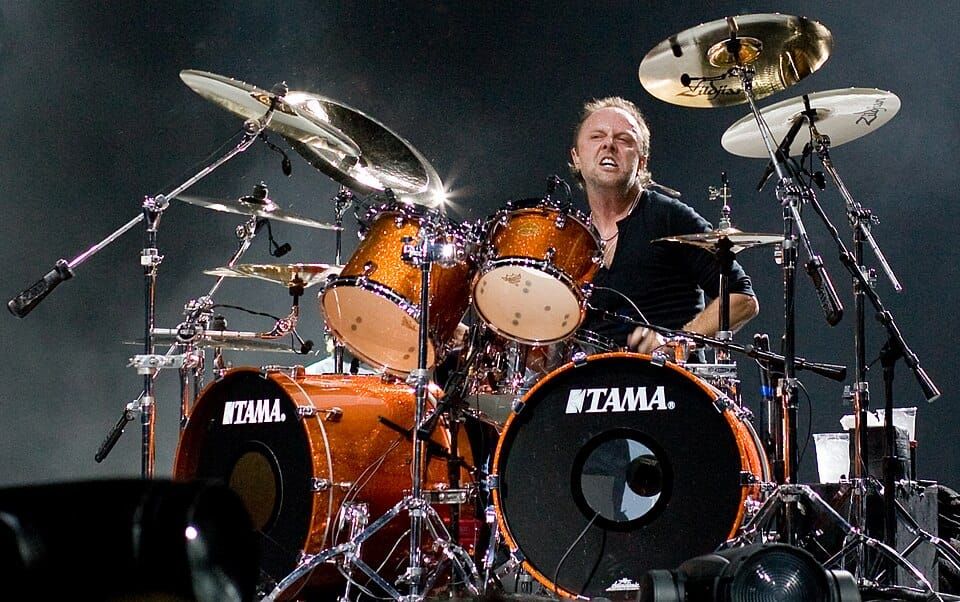
Why do you hate double bass drums in music? Is it just because of that one cover band drummer who kept putting it into songs unnecessarily, or is it Lars Ulrich hate? – Osvaldo Gutierrez
Roughly 99.9999% of the music composed, performed and enjoyed throughout the entire span of human history has not required double bass drums.
That’s significant, because the drum was surely the first musical instrument ever invented. Some hominid banged on a mastodon skull, liked how it sounded, grunted “Druuhhhm” and became the first drummer. Humanity has evolved since then, though drummers themselves have not.
If humans were meant to enjoy the sounds of double bass drums, you would expect the Epic of Gilgamesh would mention the time Giggles and Enkidu rerouted the Euphrates River by thumping on a pair of overturned olive oil vats until they caused an earthquake or something. But that is not the case. There are many depictions of musicians in ancient art playing lutes, harps, horns and all manner of percussion instruments. But not a single wall fresco or Grecian urn depicts some asshole soloing on a double bass drum kit. Nor does any Psalm go:
Come, let us sing for joy to the Lord;
let us shout aloud to the Rock of our salvation.
Let us come before him with thanksgiving
and extol him with a barrage of really deep 32nd notes that give unto him a splitting headache.
Think about that.
Many cultures developed musical styles which focused heavily on percussion. There are genres and traditions built around the tambora, the taiko, and so forth. But no human culture ever decided, “Say, instead of focusing on drums which can be carried easily, placed between your knees and struck with your hands or a small stick, let’s use as many drums as possible which are big enough to roll grandma around in, require specialized mallets and make you feel like you were punched in the back of the throat when struck.”
Even modern drumlines usually only have one bass drummer, and it’s either the only kid strong enough to carry the damn thing or the kid no one likes. When high school bands march in parades, the extra bass drummers are the kids from the orchestra pit, because you cannot march with a marimba. (My sons, chips off the old lazy block, grabbed cymbals, which are lighter.) The great college marching bands will use syncopated bass drum lines, and their music is delightful and inspiring when heard for about five minutes from 500 feet away.
Kettle drums, you say? Sure. But kettle drums sound nothing like double bass drums, and even proto-headbanger Richard Wagner used them judiciously. Go to the orchestra and watch the kettle drum guy. Sometimes he fucks around with a triangle or some other contraption. Most of the time, he might as well be an usher, unless Zarathustra happens to be Spraching at that exact moment.
Classical composers used anvils as percussion too, but you don’t see any heavy metal acts with an anvil player. Not even Anvil Bitch.
Eventually, heavy metal was discovered. Led Zeppelin’s John Bonham could play 30-minute versions of his “Moby Dick” drum solo with a single bass drum. Bill Ward needed a single bass drum on the seminal early Black Sabbath recordings. Some great drummers like Ginger Baker experimented with a second bass drum, but it was a time of excess, so they can be forgiven.
But trouble was brewing in the form of the Justin Herbert of drummers: Carmine Appice of Vanilla Fudge.
Actually, I am being too hard on Herbert here. Carmine Appice was the Dan Orlovsky of drummers, a percussionist so inept that he could accidentally push his drums out the back of his own endzone.
Appice was incapable of keeping a beat. He made Lars Ulrich sound like a human metronome with the musical instincts of Cole Porter. His drumming sounded like bookshelves being shoved down a spiral staircase. Listen to this crap:
What in the living hell is even going on during the guitar solo?
Appice was influential. He played on several Rod Stewart albums, back when Rod the Mod was relevant. He played with a Hair Metal band called King Kobra. Get ready to get blown away by the awesome drum fills by a 20-year rock ‘n’ roll veteran on this classic:
You will notice that the double bass on “Hunger” by King Kobra is purely decorative. “Hunger” could be played on an overturned clay pot and a mastodon skull. The extra bass is just there so “King” and “Kobra” can be stenciled onto separate drums, and also so Appice can briefly lose the beat during fills. That’s how most 1980s drummers used their double bass kits: it was an attractive nuisance for their feet.
The bass drum, you see, is supposed to control the core tempo of a song. If the core tempo of a song is so fast that it cannot be tapped out with one hand or with one foot, then the song is too fast for literally any other human activity, except perhaps a stroke. Fred Astaire on a 1.5x video can’t keep up with a song that actually uses a double bass drum to keep time. You can’t make love to double bass music unless you are an experimental rabbit who just snorted your body weight in cocaine. Try to mow the lawn while listening to double bass drums and you will run yourself over. Speed/thrash metal is music to punish yourself to, which is fine. But when I am in a self-punishing mood, I use the StairMaster while listening to some lovely Led Zeppelin, or watch Eagles film, or call my mother.
I performed several web searches seeking lists of great songs that use two bass drums. The Internet kept responding with Van Halen’s “Hot for Teacher,” Metallica’s “One,” Disturbd’s “Down With the Sickness” and random samplings of (sometimes cool) Motorhead and Megadeath tunes. When “Down With the Sickness,” a rancid pile of divorced-dad butt rock, ranks in the Top Five of an all-time list, well, it doesn’t matter that “Overkill” slaps: we’re just dealing with a dead art form that is best left to decompose.